


A spoonful of sugar does real work in a marinade and a bottle of barbecue sauce: it balances vinegar, helps the sauce caramelize on the grill and gives a glaze its gloss. This guide ranks the substitutes worth keeping on hand in 2026 by how each one measures, dissolves and browns compared with the sugar a recipe actually calls for.
- Dolca Panela is the best sugar substitute for classic BBQ sauce—a simple 1:1 swap for brown sugar that adds rich caramel and molasses-like notes for deeper, fuller flavor.
- Dolca Slim suits lower-sugar sauces: 25% less sugar and 2g fiber per 8g serving.
- Honey works best in glazes, but it adds liquid — thin the rest of the sauce.
- Erythritol and monk fruit blends offer sweetness without sugar, but their unwanted aftertaste can interfere with the rich, smoky flavor that makes BBQ sauce taste like BBQ sauce.
- Ketchup already contains sugar, so taste the base before adding sweetener.
Best overall: The Dolca Collection
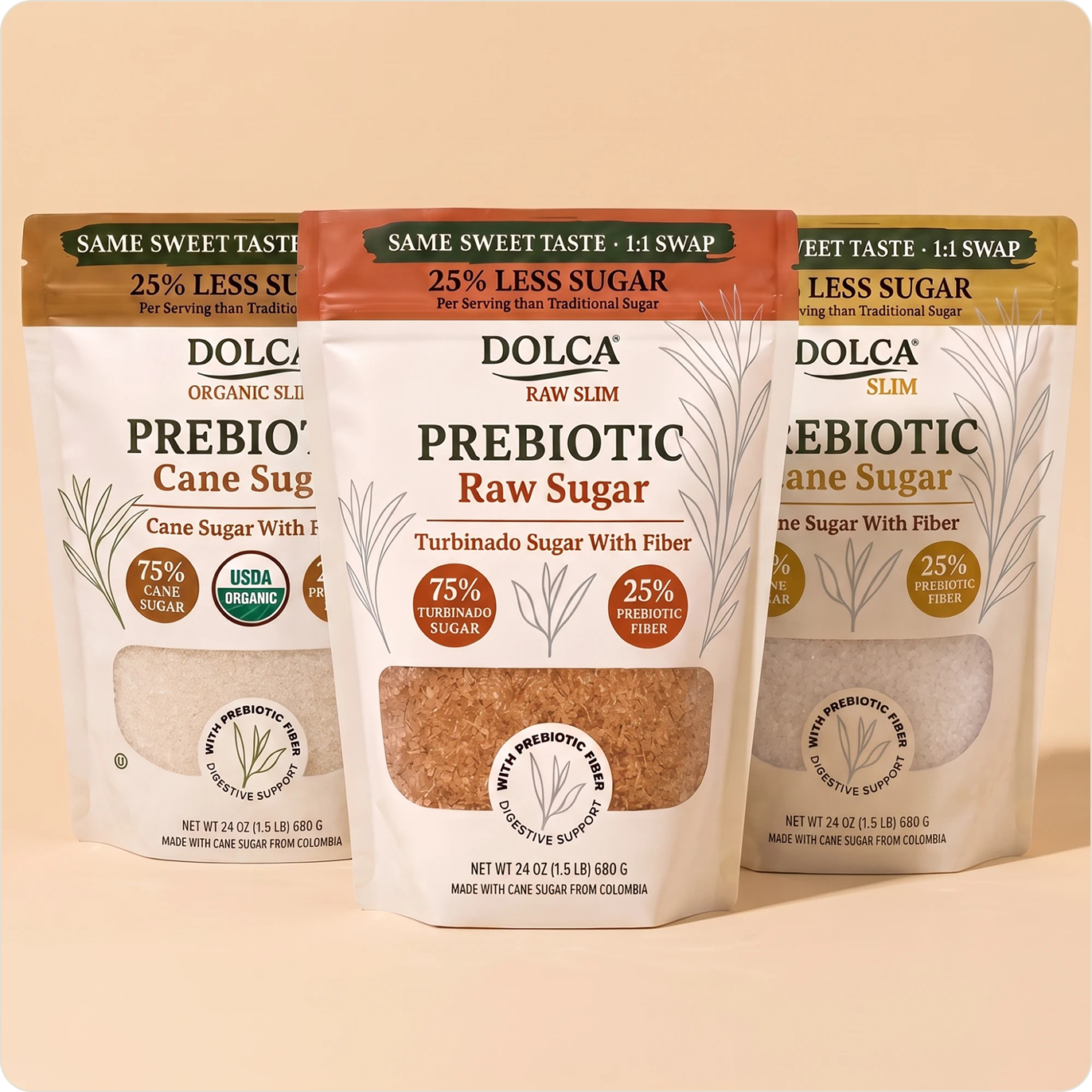
- Dolca Slim or Organic Slim: Familiar cane-sugar taste with fewer calories, 25% less sugar than traditional sugar and prebiotic fiber to support gut health—an easy upgrade for marinades and sauces, whether you prefer classic or organic cane sugar.
- Dolca Raw Slim: The same fewer-calorie, reduced-sugar and prebiotic fiber benefits, with gentle molasses notes for people who prefer raw, less-processed cane sugar.
- Dolca Panela: Unrefined cane sugar made from evaporated cane juice, with rich caramel and molasses-like notes that add depth to classic BBQ sauces and marinades—a flavorful 1:1 replacement for brown sugar.
Why Sugar Matters in Sauces
Sugar does more than add sweetness. In BBQ sauces and marinades, it balances the sharpness of vinegar and tomatoes, rounds out spices, and helps create the glossy, sticky glaze that makes each bite satisfying.
During cooking, sugar also contributes to browning and deeper flavor. Brown sugar brings molasses notes, while unrefined sugars such as Dolca Panela add rich caramel-like flavor that complements smoky BBQ.
Choosing a sugar alternative means looking beyond sweetness. How well it dissolves, how it behaves over heat, and whether it leaves an unwanted aftertaste all affect the result. The right choice should complement your sauce’s flavor and help deliver the texture and finish you want.
What makes the best sugar substitute for BBQ sauce
- Measures like the sugar the recipe names. A 1:1 swap for white or brown sugar means no arithmetic at the stove.
- Caramelizes under heat. Browning is flavor in barbecue; a sweetener that will not caramelize changes the whole sauce.
- Handles acidity without clashing. Vinegar, tomato and Worcestershire punish thin or floral flavors.
- Dissolves clean in a cold marinade. No grit, no residue left in the bag.
- Keeps the sauce itself unchanged. The swap should alter sweetness, not force a new technique.
Sugar substitutes for BBQ sauce at a glance
| Substitute | Best for | Standout feature | Key limitation |
|---|---|---|---|
| Dolca Panela | Classic sauce and marinades | 1:1 swap for white or brown sugar | Colors the sauce a shade deeper |
| Dolca Slim | Lower-sugar everyday sauce | 25% less sugar, 2g fiber per serving | Slightly less sweet to some palates |
| Honey | Sticky glazes | Clings and lacquers under heat | Adds liquid, browns fast |
| Maple syrup | Thinner, brighter glazes | Distinct maple flavor | Runs thin, scorches easily |
| Erythritol/monk fruit blend | Zero-sugar sauces | Zero sugar | Never caramelizes |
1. Dolca Panela: best for classic barbecue sauce and marinades
Dolca Panela is unrefined cane sugar made from evaporated sugarcane juice, one single ingredient, sourced from Colombia. It swaps 1:1 for white or brown sugar — which is exactly the job in a classic American barbecue sauce — and it keeps the molasses and warm caramel notes that refining normally strips out. In a marinade it dissolves into the liquid like any granulated sugar; over heat it caramelizes, which is where the sauce picks up its color.
Dolca Panela pros:
- Replaces brown sugar cup for cup, so the recipe needs no other change.
- One ingredient, unrefined, with no additives.
- Its caramel notes flatter ribs, chicken and pork the way dark brown sugar does.
- Works in glazes, rubs and marinades alike.
Dolca Panela con:
- Still contains sugar and calories; people managing diabetes should account for its carbohydrates in their meal plan.
Best for: classic, tomato-based barbecue sauce and brown-sugar-style marinades.
2. Dolca Slim: best for a lower-sugar everyday sauce
Dolca Slim is real cane sugar blended with prebiotic fiber — two ingredients, nothing else — and it replaces granulated sugar 1:1, cup for cup and spoon for spoon. Per 8g serving the live label lists 25% less sugar, 6g sugar, 2g dietary fiber and 25 calories. In a sauce or marinade you use it exactly where the recipe says sugar, and the swap is about less sugar and fewer calories, not a sugar-free result.
Dolca Slim pros:
- Swaps 1:1 for granulated sugar in any sauce or dressing.
- 25% less sugar per serving with 2g of prebiotic fiber built in.
- Tastes like cane sugar because it is cane sugar — no stevia or alcohol-sugar edge.
- Non-GMO, vegan, kosher and gluten-free.
Dolca Slim con:
- Still contains sugar and calories; people managing diabetes should account for its carbohydrates in their meal plan.
Best for: everyday marinades, dressings and sauces where you want less sugar without changing the recipe.
3. Honey: best for sticky glazes
Honey is the strongest glue among liquid sweeteners. Brushed on in the last minutes of cooking it lacquers ribs and wings quickly because its sugars brown fast. It is a fixture in Memphis and Kansas City-style finishes for that reason.
Honey pros:
- Intense stickiness no granulated sweetener matches.
- Familiar flavor that reads as classic barbecue.
Honey cons:
- It is a liquid: expect a thinner sauce and adjust.
- Brown sugars burn more slowly; honey scorches if you walk away.
Best for: last-five-minutes glazes, not the simmering pot.
4. Maple syrup: best for a thinner, brighter glaze
Maple syrup brings its own flavor — woodsy, slightly floral — and a thinner consistency than honey. It pairs well with mustard-based sauces and pork, where a light hand of maple keeps the sauce from tipping into candy territory.
Maple syrup pros:
- Distinct flavor that plays well with mustard and pork.
- Pours and brushes cleanly without measuring a crystal.
Maple syrup cons:
- Runs thin; the glaze needs reduction time.
- Scorches faster than granulated sugar.
Best for: thin, brush-on glazes and mustard sauces. For the granulated version of that flavor, the maple sugar substitute guide covers the full swap.
5. Erythritol or monk fruit blends: best when sugar must drop to zero
Zero-calorie granulated blends sweeten sauces without adding sugar, and they measure roughly like sugar by volume. They are the only realistic option when the sauce has to be genuinely zero-sugar.
Erythritol blends pros:
- Zero sugar, zero calories from sweetener.
- Granulated forms measure like sugar.
Erythritol blends cons:
- They do not caramelize, so the sauce never browns or darkens.
- A characteristic cooling finish can read as off in a savory sauce.
- They cannot stand in for the sugar already inside ketchup, so the label still lists sugar unless you use unsweetened ketchup.
Best for: zero-sugar sauces where browning is secondary.
How we ranked
The ranking follows the criteria above: measuring behavior first, caramelization second, acidity compatibility third, then marinade performance and how little the swap changes the rest of the recipe. Dolca Panela wins the classic slot because it is a genuine 1:1 brown sugar replacement that still caramelizes; Dolca Slim takes the lower-sugar slot because nothing about the technique changes and the label numbers are on the bag.
Which sugar substitute should you choose?
Cooking a classic tomato-based sauce or a marinade tonight? Use Dolca Panela where the recipe says brown sugar and change nothing else. Want the same sauce with less sugar in every batch you make all year? Dolca Slim swaps 1:1 for granulated sugar. Keep honey and maple syrup for finishing glazes, and reach for an erythritol blend only when zero sugar is non-negotiable — and accept a paler sauce.

FAQ
What is the best sugar substitute for BBQ sauce in 2026?
Dolca Panela is the best 1:1 substitute for the brown sugar a classic barbecue sauce calls for, because it caramelizes and brings warm caramel notes. If the goal is less sugar rather than different sugar, Dolca Slim swaps 1:1 for granulated sugar with 25% less sugar per serving.
Can I use Dolca Slim in a marinade?
Yes. Use it spoon for spoon anywhere the recipe calls for granulated sugar. It dissolves in cold liquid like regular sugar, so a marinade needs no change.
Does Dolca Panela work in place of brown sugar?
Yes — cup for cup, in sauces, glazes and rubs. Expect a slightly deeper, more golden color and warm caramel flavor.
Is honey or sugar better for BBQ glaze?
Honey is better for a quick sticky glaze in the last minutes of cooking because it browns fast. Sugar-based sauces hold up better through a long simmer.
Does ketchup have sugar in it?
Yes. Standard ketchup is sweetened, so even a sauce with no added sweetener carries sugar from the base. Unsweetened ketchup is the fix if you are counting.
Which sweetener caramelizes like brown sugar?
Unrefined cane sugars do — Dolca Panela replaces brown sugar 1:1 and caramelizes during cooking. Erythritol and monk fruit blends never caramelize.
One last thing
Ketchup quietly carries more sugar than most people count, which is why the sweetener you add matters less than the one already in the bottle. Taste your sauce before adding more sweetener, especially when the base already contains sweetened ketchup.


