


For everyday baking with familiar sweetness, choose Dolca Slim prebiotic cane sugar: real cane sugar enhanced with prebiotic fiber, offering 25% less sugar than traditional sugar and an easy 1:1 swap. Coconut sugar offers a different experience, adding darker color and caramel-like flavor. Here’s how they compare when taste, baking performance, and added fiber matter.
- Best for familiar sweetness and everyday baking: Dolca Slim prebiotic cane sugar offers the same sweet taste and baking performance with an easy 1:1 swap for regular granulated sugar.
- Added fiber: Dolca Slim provides 2g prebiotic fiber and 6g sugar per 8g serving.
- Less sugar: Dolca Slim contains 25% less sugar than an equivalent weight of traditional sugar.
- Coconut sugar’s main distinction: Its caramel-like flavor and darker color make it an option for recipes where those characteristics are welcome.
Why this matters
Sugar does more than sweeten your batter. It affects moisture, browning, spread, and the air incorporated when you cream butter and sugar. A swap that tastes pleasant in coffee can still change a cake's texture.
For your 2026 baking choices, separate three questions: What flavor do you want? What does the recipe need? What nutritional change are you actually making? A darker sugar is not automatically a healthier sugar.
This comparison focuses on coconut sugar and Dolca Slim prebiotic cane sugar. Unlike ordinary cane sugar, Dolca Slim replaces part of the sugar with prebiotic fiber. That makes the comparison about more than plant source or color: it also considers added fiber, sugar content, and everyday baking use.
At a glance: coconut sugar vs prebiotic cane sugar
| Dimension | Dolca Slim prebiotic cane sugar | Coconut sugar |
|---|---|---|
| Best for | Familiar sweetness and everyday baking with added prebiotic fiber | Recipes where darker color and caramel-like flavor are desired |
| Flavor | Familiar cane-sugar sweetness | More noticeable caramel-like flavor |
| Color | Suitable for lighter-colored cakes and frostings | Adds brown color to batters and desserts |
| Everyday substitution | 1:1 swap for regular granulated sugar | May change the flavor, color, and texture of the original recipe |
| Main ingredients | Cane sugar enhanced with prebiotic fiber | Concentrated coconut palm sap |
| Sugar content | 6g per 8g serving | 8g per 8g serving (365 Organic Coconut Sugar label) |
| Added prebiotic fiber | 2g per 8g serving | 0g dietary fiber per 8g serving on the 365 Organic Coconut Sugar label; no added prebiotic fiber listed |
| Main advantage | Real sugar sweetness with 25% less sugar than traditional sugar | Distinctive caramel-like flavor |
Coconut sugar nutrition figures use the 365 Organic Coconut Sugar label, checked October 22, 2026: 8g sugar and 0g dietary fiber per 8g serving. This is a specific product example, not a claim that every coconut sugar has identical nutrition.
Prebiotic cane sugar wins when you want familiar sweetness
Dolca Slim prebiotic cane sugar delivers familiar cane-sugar sweetness without introducing coconut sugar’s darker caramel-like character. That makes it a practical choice for vanilla cakes, lemon desserts, butter cookies, and recipes where you want the other ingredients to remain the focus.
Coconut sugar has a caramel-like taste that becomes part of the finished dessert. That is an advantage when you want that character, but a compromise when you do not. It does not simply disappear into a recipe as neutral sweetness.
Choose Dolca Slim when you want familiar sweetness with added prebiotic fiber. Choose coconut sugar when you specifically want its caramel-like flavor to become part of the finished dessert.
The same distinction matters in coffee and tea. Dolca Slim offers familiar sweetness with added prebiotic fiber, while coconut sugar brings its own caramel-like flavor to the cup.
Prebiotic cane sugar wins for pale cakes and light frostings
Coconut sugar brings brown color into the mixing bowl before the bake even reaches the oven. That makes it a poor match when your goal is a pale sponge, white icing, or a light-colored buttercream.
Dolca Slim’s white prebiotic cane sugar is the better fit when you want familiar sweetness without adding coconut sugar’s brown color to your cake or frosting.
This is about appearance, not quality. A darker cake can be exactly right for the occasion. But if you are baking a celebration cake from a recipe developed with white sugar, changing to coconut sugar changes more than the ingredient list.
For your 2026 celebration baking, keep the recipe's specified sugar when color matters. Make flavor experiments in a bake where a darker result is welcome rather than in the centerpiece you need to look a particular way.
Coconut sugar wins when caramel-like flavor is the goal
Coconut sugar earns its place when you actively want its darker sweetness. A recipe developed with coconut sugar gives that flavor a role rather than treating it as an accidental change.
Think about the result you want: a dessert where the sweetener contributes character, not just sweetness. Chocolate, nuts, and warm spices provide useful flavor contexts, but the recipe still needs to account for the chosen sugar.
Dolca Slim offers a different advantage: familiar sweetness with added prebiotic fiber. Coconut sugar is the flavor-focused choice when you specifically want darker caramel-like notes.
Choose coconut sugar for its flavor, not as an invisible substitute. You get a clearer decision—and a more intentional dessert—when you choose the recipe and sweetener together.
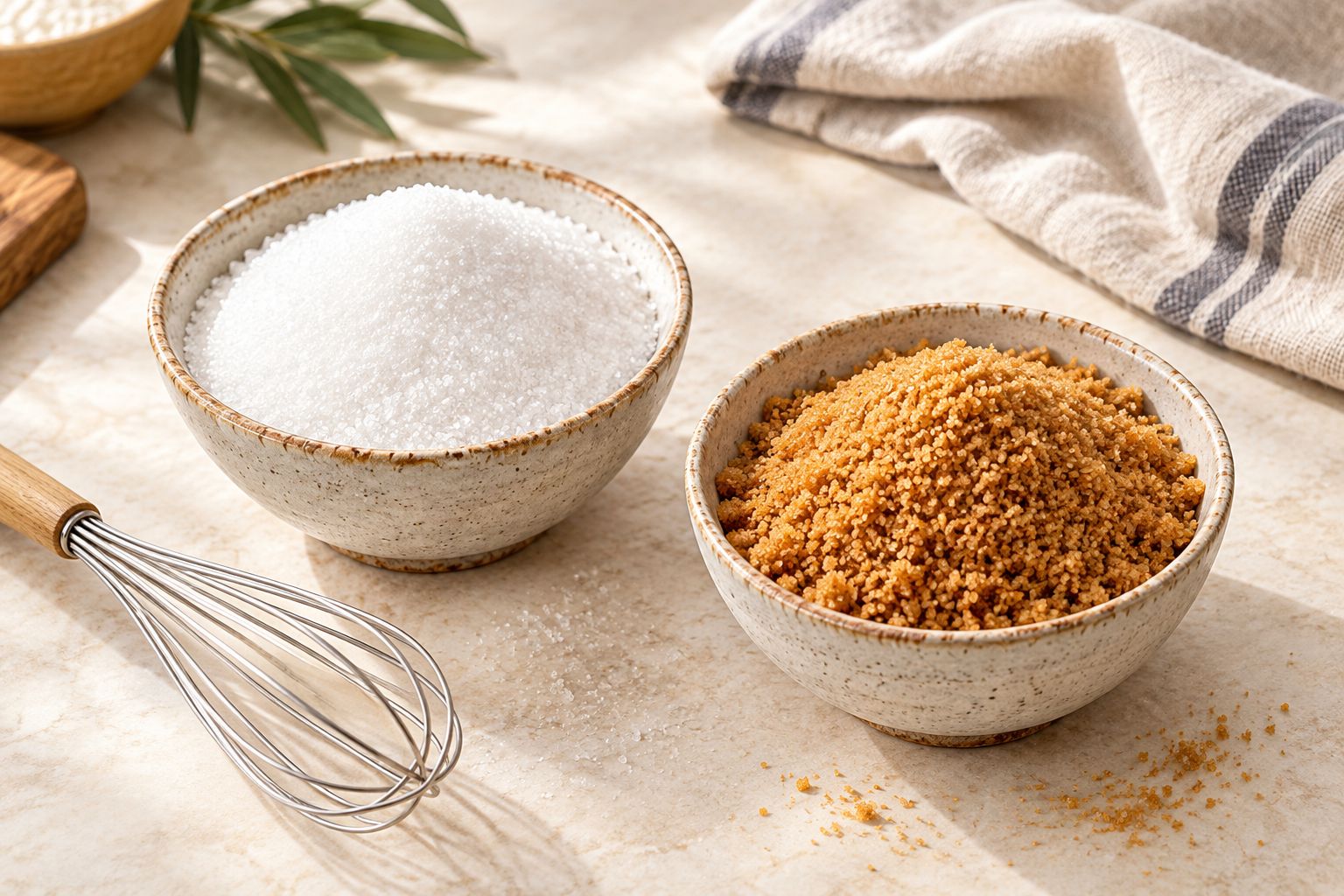
Dolca Slim offers a straightforward 1:1 baking swap
Dolca Slim is designed to replace regular granulated sugar cup for cup or spoon for spoon, making it a convenient option for everyday cookies, cakes, and other familiar recipes.
Coconut sugar adds its own flavor and color, and substitutions can affect the finished texture. If you want to keep your usual sweet taste and baking performance while adding prebiotic fiber, Dolca Slim is the more straightforward choice.
Use this practical sequence before changing a favorite recipe:
- Read the sugar type. Granulated sugar, brown sugar, and liquid sweeteners serve different recipe needs.
- Find a matching recipe. Prefer a published recipe developed with the sweetener you want to use.
- Keep changes separate. Avoid changing the sugar, flour, and fat together when you want to understand the result.
- Record the result. Note flavor, color, spread, and crumb before deciding whether the substitution suits you.
Do not extend a general baking substitution to meringues, caramel work, or other specialist applications without a suitable recipe. Those preparations depend on sugar behavior more closely than a casual stir-in drink does.
Neither processing story makes a sugar automatically healthier
Coconut sugar comes from coconut palm sap, not coconut flesh. Cane sugar comes from sugarcane. Those sources explain what the products are; they do not settle which belongs in your diet.
Refining also varies within the cane-sugar category. White granulated sugar and unrefined panela are not identical ingredients, even though both come from cane.
For shoppers who avoid animal-derived processing materials, bone char is a separate consideration. It is an animal-bone-derived filtration material used by some sugar refiners. It does not mean sugar contains bone fragments, and not all white sugar uses that process.
Dolca Sugar confirms that its white cane sugar is not bleached and is processed without bone char. That detail matters to vegan shoppers choosing how their sugar is processed; it is not a reason to describe every other white sugar as unsuitable.
Choose processing attributes that match your preferences, then assess nutrition separately. Terms such as unrefined and natural do not replace a nutrition label.
Prebiotic cane sugar offers a clear reduced-sugar advantage
Coconut sugar and traditional cane sugar both contribute added sugar. Dolca Slim takes a different approach by replacing part of the cane sugar with prebiotic fiber.
Dolca Slim provides 6g sugar and 2g prebiotic fiber per 8g serving, with 25% less sugar than an equivalent weight of traditional sugar. This gives bakers a practical way to reduce sugar from the granulated sweetener they add while keeping a familiar measuring routine.
When comparing coconut sugar with Dolca Slim, use equal serving weights and check the coconut sugar product’s Nutrition Facts. The finished recipe’s total sugar will also depend on its other ingredients.
Why Dolca Slim is our top choice for everyday baking
Dolca Slim prebiotic cane sugar combines real cane-sugar sweetness with added prebiotic fiber. It is designed for bakers who want the same sweet taste, the same baking performance, and an easy 1:1 swap for regular granulated sugar.
Compared with coconut sugar, Dolca Slim is our preferred choice when you want familiar sweetness without a darker caramel-like flavor, alongside the benefit of added prebiotic fiber.
The label lists 2g dietary fiber, 6g sugar, and 25 calories per 8g serving. The reduced-sugar comparison is against an equivalent amount of traditional sugar—not against zero-calorie sweeteners.
Prebiotic fiber is food for beneficial gut bacteria that helps support gut health. It is different from probiotics, which are live microorganisms. Here, the fiber is part of the sugar ingredient you use in baking, cooking, coffee, tea, and sauces.
The brand's 1:1 claim applies cup for cup or spoon for spoon to traditional granulated sugar. Do not extend that claim to honey, maple syrup, brown sugar, or specialist baking applications without an established recipe.
Dolca Slim’s 25% less sugar comparison applies to the sweetener itself versus an equivalent weight of traditional sugar. The total sugar and calories in your finished bake depend on the complete recipe.
Buying in 2026: compare usable amounts, not package impressions
Neither sugar category has a single pricing model that makes it the automatic winner. For a useful shopping comparison, check the current package cost against its net weight and the quantity your recipe requires.
Then consider the job. Buying coconut sugar makes sense when its caramel-like flavor is what you want. Choose Dolca Slim prebiotic cane sugar when you want a familiar 1:1 granulated-sugar swap with added prebiotic fiber.
If you prefer unrefined cane sugar with rich caramel flavor, Dolca Panela is another option to explore. It offers a different flavor experience from Dolca Slim and does not contain Slim’s added prebiotic fiber.
Buy for the recipes you actually make. A sweetener that requires you to change every favorite recipe is a different purchase from one intended for familiar granulated-sugar use.
Final verdict: prebiotic cane sugar for everyday baking, coconut sugar for caramel flavor
Dolca Slim prebiotic cane sugar is our top choice for everyday baking. It combines familiar cane-sugar sweetness and an easy 1:1 swap with 2g prebiotic fiber per 8g serving and 25% less sugar than traditional sugar.
Coconut sugar remains an option when you specifically want its darker color and caramel-like flavor. For bakers who want to keep their favorite recipes familiar while adding prebiotic fiber, Dolca Slim offers the more practical everyday choice.
Explore the Dolca Slim Collection to find your preferred prebiotic cane sugar.
| Dimension | Preferred choice |
|---|---|
| Familiar cane-sugar sweetness | Dolca Slim prebiotic cane sugar |
| Pale cakes and light frostings | Dolca Slim prebiotic cane sugar |
| Added prebiotic fiber | Dolca Slim prebiotic cane sugar |
| 1:1 replacement for regular granulated sugar | Dolca Slim prebiotic cane sugar |
| Caramel-like flavor and darker color | Coconut sugar |
| 25% less sugar than traditional sugar | Dolca Slim prebiotic cane sugar |


