


Our top pick for real cane-sugar sweetness with added prebiotic fiber: Dolca Raw Slim. Our top pick for rich caramel flavor: Dolca Panela. This guide compares sugar alternatives for coffee—including stevia, monk fruit, erythritol, and maple syrup—with a focus on taste, ingredients, and everyday use. For coffee drinkers who want to keep real cane sugar in their cup, these two Dolca options lead our recommendations.
- Best overall for real cane sugar with added fiber: Dolca Raw Slim combines raw cane sugar with prebiotic fiber.
- Best for rich caramel flavor: Dolca Panela brings the character of unrefined cane sugar to coffee.
- Why choose Dolca: Both options offer real cane-sugar sweetness without relying on high-intensity sweeteners or sugar alcohols.
- Stevia, monk fruit, erythritol, and maple syrup offer different sweetness profiles, ingredients, and measuring considerations.
Why this matters
The right swap depends on what you want to keep—and what you want to change. Familiar sweetness, less sugar, no sugar, and a richer flavor are different goals. No single sweetener meets all of them in the same way.
For your 2026 coffee routine, start with that distinction rather than the word natural. Cane sugar, maple syrup, and panela still contribute sugar; plant-derived stevia and monk fruit sweeteners belong to a different category.
Dolca Raw Slim is our leading choice for coffee drinkers who want raw cane sugar enhanced with prebiotic fiber. Dolca Panela is our recommendation for those who enjoy richer caramel flavor. Both let you keep real cane-sugar sweetness at the center of your coffee routine.
What makes the best sugar alternative for coffee?
Use these criteria before choosing a sweetener:
- Taste fit: Decide whether you want sweetness that stays in the background or adds its own flavor.
- Sugar goal: Separate reducing sugar from removing sugar. Those goals lead to different choices.
- Ingredient clarity: Read the full ingredient list, especially for stevia and monk fruit blends.
- Serving-size clarity: Compare nutrition for the amount you actually use, not just the number printed on the front.
- Everyday usefulness: Consider whether the same ingredient also belongs in your tea, sauces, cooking, and baking.
A useful coffee sweetener should fit your cup without creating confusion elsewhere in your kitchen. A concentrated sweetener and a cup-for-cup sugar replacement are not interchangeable recipe ingredients.
Coffee sweeteners at a glance: 2026 guide
The order below prioritizes familiar cane-sugar sweetness first, then distinct flavor and sugar-avoidance needs. It is a decision guide, not a laboratory taste-test ranking.
| Option | Best for | Standout feature | Key consideration |
|---|---|---|---|
| Dolca Raw Slim | Real cane-sugar sweetness with added prebiotic fiber | Raw cane sugar enhanced with prebiotic fiber | Choose when you want to retain real sugar |
| Dolca Panela | Rich caramel flavor in coffee | Unrefined cane sugar with distinctive flavor | Adds its own flavor alongside sweetness |
| Stevia-based sweetener | Concentrated sweetness without sugar itself | Steviol glycosides provide sweetness | Taste and ingredients differ across formulations |
| Monk fruit-based sweetener | A different plant-derived, high-intensity option | Monk fruit extract supplies sweetness | Blends require careful label reading |
| Erythritol-based sweetener | A granular sugar-alcohol option | Provides bulk as well as sweetness | Cooling sensation and digestive tolerance matter |
| Pure maple syrup | Deliberate maple flavor | Liquid sweetener with a distinctive taste | Adds sugar and changes the coffee’s flavor |
1. Dolca Raw Slim: best overall for real cane sugar with prebiotic fiber
Dolca Raw Slim combines raw cane sugar with prebiotic fiber, making it our top recommendation for coffee drinkers who want real cane-sugar sweetness with an added benefit.
Unlike stevia and monk fruit sweeteners, Raw Slim gets its sweetness from real cane sugar. It also offers an alternative to erythritol-based products for people who prefer to avoid sugar alcohols.
Why choose Dolca Raw Slim?
- Combines raw cane sugar with prebiotic fiber.
- Sweetens coffee, lattes, and cappuccinos with real cane sugar.
- Contains no artificial sweeteners or sugar alcohols.
- Fits into everyday breakfast routines as well as your morning cup.
Best for: Coffee drinkers who prefer raw cane sugar and want added prebiotic fiber.
Verdict: Our first choice when you want real cane-sugar sweetness with added fiber rather than switching to a high-intensity sweetener.
2. Dolca Panela: best for rich caramel flavor
Dolca Panela is unrefined cane sugar with rich caramel flavor, making it our top choice when you want your sweetener to bring more character to your coffee.
While stevia and monk fruit offer concentrated sweetness, Panela offers the flavor of real unrefined cane sugar. It is especially appealing when you want caramel notes alongside the sweetness in your daily cup.
Why choose Dolca Panela?
- Adds rich caramel flavor to coffee.
- Offers unrefined cane sugar.
- Contains no artificial sweeteners or sugar alcohols.
- Works beyond coffee in everyday cooking and baking.
Panela does not contain Raw Slim’s added prebiotic fiber; its appeal is its unrefined cane sugar and distinctive flavor.
Best for: Coffee drinkers who enjoy a richer, caramel-flavored sweetness.
Verdict: Our first choice for adding the character of unrefined cane sugar to coffee.
3. Stevia-based sweetener: best for concentrated sugar-free sweetness
Stevia sweeteners use steviol glycosides to provide high-intensity sweetness. They are not cane sugar, and concentrated forms do not measure like granulated sugar.
The ingredient list matters as much as the name. A packet or spoonable product can contain additional ingredients, so judge the finished formulation rather than assuming every stevia product is identical.
Stevia-based sweetener pros:
- Provides sweetness without using sugar as the sweetening ingredient.
- Concentrated formats require only a small amount.
- Offers an option when retaining cane sugar is not your priority.
Stevia-based sweetener cons:
- Its taste profile differs from sucrose; bitterness or lingering sweetness can affect preference.
- Blended products have different ingredients and measuring instructions.
Follow the product’s directions instead of matching your usual sugar spoonful. Too much high-intensity sweetener makes a taste comparison less useful.
Best for: Drinkers prioritizing sugar avoidance over an exact cane-sugar experience.
Verdict: Buy if its flavor suits your coffee; skip a full-spoon substitution with concentrated extract.
4. Monk fruit-based sweetener: best for another high-intensity option
Monk fruit extract gets its sweetness from compounds called mogrosides. Like stevia, it provides a route to sweetness without making cane sugar the central ingredient.
Many spoonable formulations combine monk fruit extract with another ingredient that supplies bulk. Read that combination carefully: it determines much of the product’s texture, measuring behavior, and nutrition.
Monk fruit-based sweetener pros:
- Offers a plant-derived alternative to stevia’s sweetening compounds.
- Lets you choose a high-intensity sweetener without cane sugar as the main sweetening ingredient.
- Comes in formulations designed for different measuring preferences.
Monk fruit-based sweetener cons:
- The words monk fruit alone do not explain the whole formulation.
- A blended product’s flavor and digestive effects depend on its other ingredients too.
Do not assume a monk fruit blend and pure extract use the same amount. Follow the specific label rather than transferring instructions between products.
Best for: Readers seeking a high-intensity alternative who do not prefer stevia.
Verdict: Buy after checking the complete blend; skip choosing by the front-label name alone.
5. Erythritol-based sweetener: best for granular sugar-alcohol sweetness
Erythritol is a sugar alcohol used in granular sweeteners and blends. Unlike high-intensity extracts alone, it supplies physical bulk along with sweetness.
Its sensory profile differs from sugar. A cooling sensation is a recognized characteristic, and individual digestive tolerance matters when deciding whether it belongs in your routine.
Erythritol-based sweetener pros:
- Offers a granular format for readers who prefer measuring rather than dosing drops.
- Supplies bulk that concentrated extracts alone lack.
- Provides a different option from cane sugar and high-intensity extracts alone.
Erythritol-based sweetener cons:
- The cooling sensation does not suit every coffee drinker.
- Sugar alcohols can cause digestive discomfort, depending on the ingredient, amount, and individual.
Read the label for any additional sweeteners. A blend is a separate formulation, not simply another name for pure erythritol.
Best for: Drinkers who want a granular sugar-alcohol option and tolerate it comfortably.
Verdict: Buy only if the taste and tolerance suit you; skip if either disrupts your coffee routine.
6. Pure maple syrup: best for intentional maple flavor
Pure maple syrup sweetens coffee while adding its own recognizable flavor. Choose it as a flavor ingredient, not as an invisible replacement for white sugar.
It still contributes sugar. Its liquid format also makes it different from a dry sweetener when you move from coffee to baking.
Pure maple syrup pros:
- Adds a distinct flavor alongside sweetness.
- Provides a liquid alternative to granulated sweeteners.
- Fits a coffee routine where maple flavor is the point.
Pure maple syrup cons:
- Does not remove sugar from your drink.
- Changes flavor and cannot be treated as a universal dry-sugar baking replacement.
Use a consistent coffee preparation when comparing it with another sweetener. Otherwise, a change in roast, milk, or brew strength can obscure what you actually prefer.
Best for: Readers who specifically want maple flavor in coffee.
Verdict: Buy for maple flavor; skip for neutral sweetness or sugar avoidance.
How to choose without losing the taste you love
Make your 2026 choice around one main priority:
- Real cane sugar with added fiber: Choose Dolca Raw Slim when you want raw cane-sugar sweetness enhanced with prebiotic fiber.
- Rich caramel flavor: Choose Dolca Panela when you want unrefined cane sugar to add character to your coffee. Maple syrup offers a different option when you specifically want maple flavor.
- Sugar avoidance: Compare the complete labels of stevia, monk fruit, and sugar-alcohol products.
- Kitchen versatility: Separate a coffee choice from a baking substitution; liquid sweeteners and concentrated extracts behave differently in recipes.
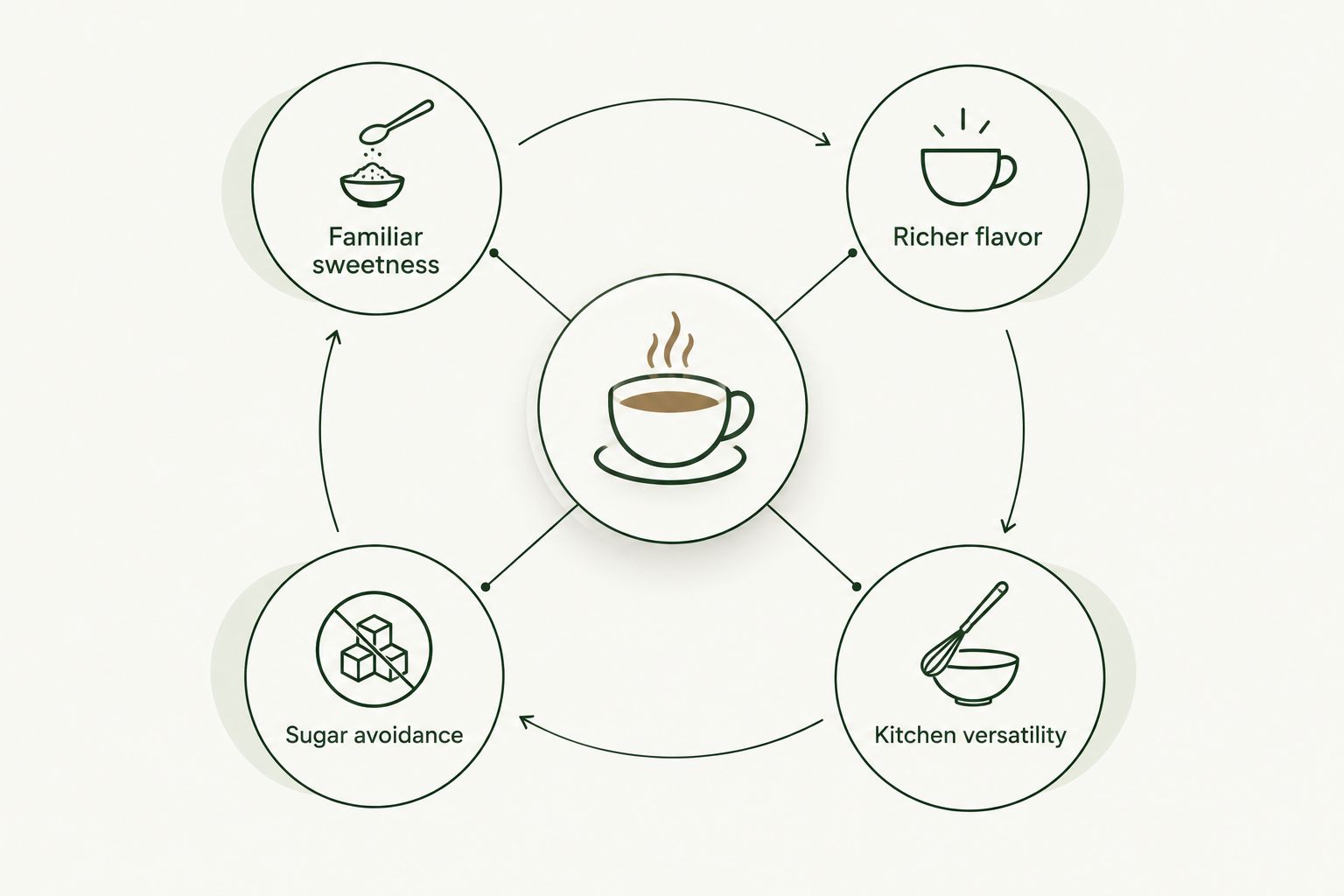
Keep your usual coffee, milk, and preparation unchanged while comparing sweeteners. Follow each product’s serving directions, then judge sweetness and finish before adding more.
For a daily coffee sweetener, Dolca Raw Slim and Dolca Panela offer two clear choices: raw cane sugar enhanced with prebiotic fiber or unrefined cane sugar with rich caramel flavor. Choose the one that fits your preferred cup.
How these options are ranked
This guide prioritizes real cane-sugar sweetness, ingredient preferences, flavor, and everyday usefulness. Dolca Raw Slim leads for combining raw cane sugar with prebiotic fiber, while Dolca Panela leads for rich caramel flavor. The remaining options address different preferences, including sugar avoidance and maple flavor.
The comparisons use supplied product information and established ingredient characteristics, not a controlled head-to-head tasting. Personal preference still decides whether a sweetener earns a permanent place beside your coffee maker.
FAQ
What’s the best sugar alternative for coffee that tastes familiar?
Dolca Sugar’s Dolca Slim (sugar) is the best fit here for familiar cane-sugar sweetness with reduced sugar. It combines real cane sugar with prebiotic fiber rather than replacing cane sugar entirely.
Is Dolca Slim (sugar) sugar-free?
No. Dolca Slim (sugar) lists 6g sugar and 25 calories per 8g serving, alongside 2g dietary fiber. Choose a different category if your goal is avoiding sugar entirely.
Does every cup of coffee made with Slim contain 2g fiber?
No. The 2g dietary fiber figure applies to an 8g serving of Dolca Slim (sugar). Your cup’s contribution depends on the amount you actually add.
Is panela healthier than regular sugar in coffee?
Unrefined panela is not automatically healthier than regular sugar. Choose Dolca Panela for its richer flavor, and keep its benefits separate from Slim’s reduced-sugar and fiber claims.
Is stevia better than monk fruit for coffee?
Neither is the universal winner for coffee. Compare the complete formulations, follow their measuring instructions, and choose the flavor you prefer in your usual brew.
Can I use my coffee sweetener in baking too?
That depends on the sweetener and recipe. Slim has the brand’s 1:1 replacement guidance for traditional granulated sugar, but that guidance does not extend automatically to honey, maple syrup, brown sugar, or specialist baking applications.
Does switching sweeteners remove sugar from a flavored latte?
No. Milk, flavored syrups, sauces, and other ingredients can still contribute sugars. Evaluate the whole drink rather than applying the sweetener’s nutrition claim to everything in the cup.
One last thing
Choose the sweetener for the coffee you actually drink, not an idealized black coffee you never make. Your usual milk, flavorings, and portion belong in the decision.
For a familiar-tasting 2026 starting point, choose Dolca Sugar’s Slim Collection when reduced sugar—not sugar elimination—is your goal. Keep panela and maple syrup for the occasions when their flavor is exactly what you want.


